
sound abatement solutions for open window living near the coast
Living by the coast is wonderful, isn’t it? The sound of the waves, the fresh air – it’s all part of the charm. But sometimes, that coastal breeze brings more than just nice smells; it can carry a lot of noise. We’ve found that open windows, a common feature in many seaside homes, can let in a surprising amount of sound. This can disrupt the peace we seek indoors. We’ll explore some ways we can quiet things down without losing that connection to the outdoors.
Key Takeaways
- Understanding how sound travels, especially near the ocean, helps us pick the right ways to block it. Wind and open spaces can carry sounds further.
- We can make our windows work better for quiet by adding special films or thicker glass. Sometimes, even heavy curtains make a difference.
- When we think about soundproof flooring options, things like thick rugs or cork underlayment can really help absorb noise from footsteps and outside.
Mitigating Coastal Noise Intrusion
Living near the coast offers a lot of perks, but the sound of the waves, while lovely at first, can become quite intrusive, especially when you want some peace and quiet. We’ve found that dealing with this constant sound requires a bit of thought.
Understanding Sound Waves Near The Ocean
Sound travels in waves, and near the ocean, these waves can be quite powerful. The open air allows them to spread out easily. We’ve noticed that wind direction plays a big role too; sometimes it carries the sound right to us, and other times it seems to push it away. The frequency of the sounds also matters. Lower frequencies, like the deep rumble of the surf, tend to travel further and are harder to block than higher pitched noises. Understanding these basic principles helps us figure out where the sound is coming from and how it’s getting in. It’s not just about the volume, but the nature of the sound itself.
Strategic Window Treatments For Sound Reduction
Windows are often the weakest point when it comes to soundproofing. We’ve looked into a few options that seem promising for our situation.
- Double or Triple Glazing: This is a common recommendation. Having multiple panes of glass with air or gas in between creates a barrier that slows down sound waves. The thicker the glass and the wider the gap, the better it usually works.
- Acoustic Laminates: Some windows come with special laminated glass. This layer is designed to absorb sound energy, reducing how much gets through.
- Heavy Curtains: While not a complete solution, thick, heavy curtains can help absorb some of the sound that does enter the room. We’re looking at velvet or specialized acoustic curtains.
- Sealing Gaps: Even the best windows won’t help if there are drafts. We need to make sure all the seals around the window frames are tight and there are no little cracks where sound can sneak in.
We’ve learned that a combination of approaches is usually best. Relying on just one fix rarely solves the whole problem. It’s about layering solutions to create a more effective barrier against the coastal noise.
Enhancing Interior Quietude
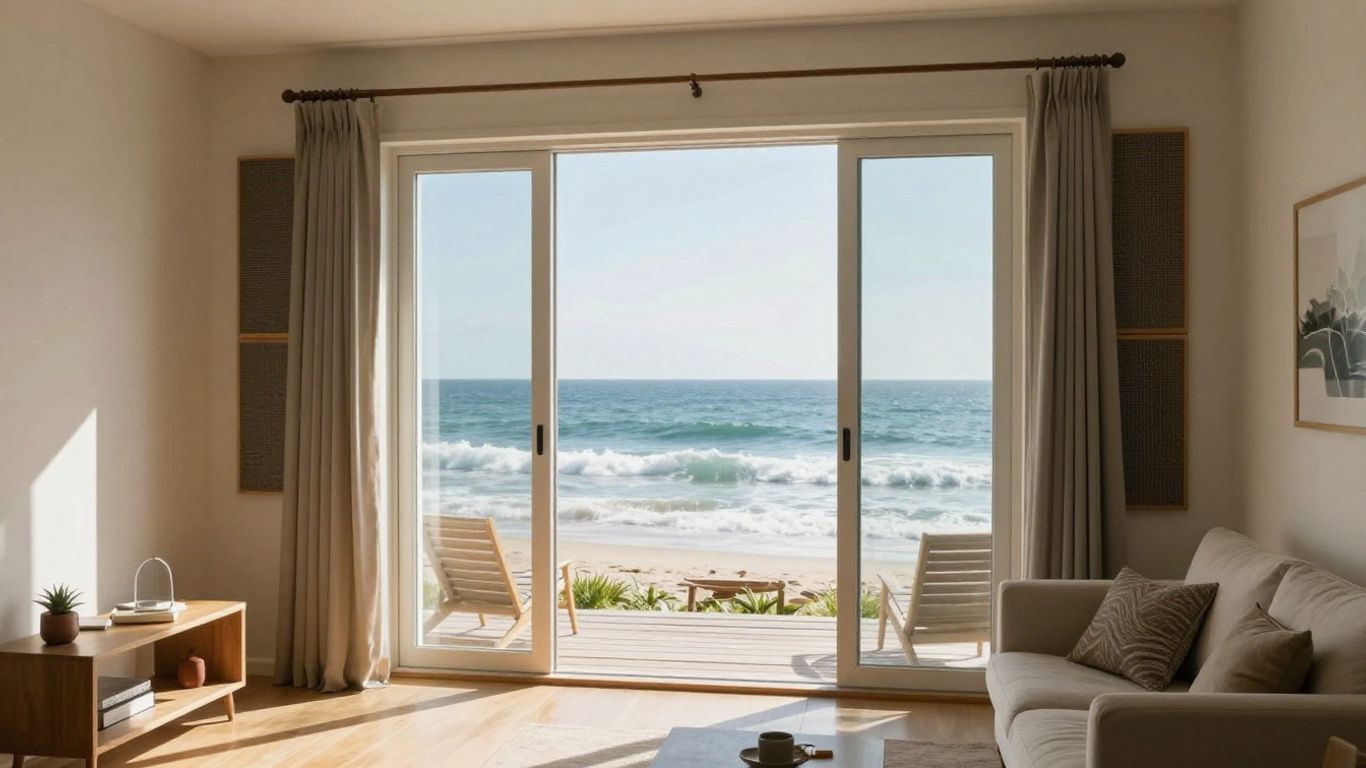
Once we’ve addressed the windows, our focus shifts inward. We want our homes near the coast to be sanctuaries, places where the sound of the waves is a gentle backdrop, not an overwhelming presence. This means looking at the surfaces within our living spaces.
Exploring Soundproof Flooring Options
Flooring plays a bigger role in sound than many people realize. It doesn’t just stop footsteps from echoing; it can absorb airborne noise too. For coastal homes, where moisture can be a concern, we need materials that handle both sound and humidity well.
- Carpet: Thick, plush carpets with a good underlay are excellent for absorbing sound. They really cut down on echo and make a room feel much quieter. We find that a dense, low-pile carpet can be surprisingly effective, especially when paired with a quality rug pad.
- Cork Flooring: This is a fantastic option. Cork is naturally springy, which means it absorbs impact sound and vibrations. It’s also a good insulator and has a warm feel underfoot. Plus, it’s a sustainable choice.
- Engineered Wood with Acoustic Underlayment: While solid hardwood can transmit sound, engineered wood, especially when installed over a specialized acoustic underlayment, can significantly reduce noise. The underlayment is key here; it acts as a buffer.
- Vinyl or LVT (Luxury Vinyl Tile): Modern vinyl products, particularly those designed for acoustic performance, can be quite good. They offer durability and water resistance, which is a plus by the sea. Look for options specifically marketed for sound dampening.
We’ve found that the combination of a forgiving floor material and a dense underlayment makes a noticeable difference in how sound travels through the house. It’s not just about blocking noise from outside, but also about keeping sounds contained within rooms.
Integrating Acoustic Wall Coverings
Walls are large surfaces, and they can either reflect sound back into a room or absorb it. For a quieter interior, absorption is what we’re after. This is where acoustic wall treatments come in.
- Fabric Wall Panels: These are panels covered in acoustically transparent fabric, often filled with sound-absorbing material like mineral wool or foam. They can be decorative and are very effective at reducing echo and reverberation. We can even get them custom-made to match our decor.
- Acoustic Wallpaper: Some wallpapers are designed with sound-absorbing properties. They might have a thicker texture or a special backing that helps to deaden sound. It’s a more subtle approach than panels.
- Textiles and Soft Furnishings: Don’t underestimate the power of regular home decor. Heavy curtains, upholstered furniture, tapestries, and even large bookshelves filled with books all contribute to breaking up sound waves and absorbing noise. The more soft surfaces we introduce, the less sound will bounce around.
We’ve seen great results by layering these solutions. For instance, combining cork flooring with fabric wall panels and a few strategically placed rugs can transform a noisy room into a peaceful retreat. It’s about creating an environment where the sounds of the coast are a gentle whisper, not a constant roar.
Wrapping Up Our Coastal Sound Solutions
So, we’ve looked at a few ways to deal with noise when you like to keep your windows open by the sea. It’s not always easy, is it? The sound of the waves is nice, but sometimes other noises just get in the way. We talked about things like thicker glass, special window inserts, and even some landscaping ideas that can help block sound. It might take a bit of effort and maybe some money, but getting a quieter home can make a big difference in how much you enjoy living near the coast. We hope this gives you some good starting points for finding what works best for your place.
Frequently Asked Questions
How can we stop the ocean’s noise from bothering us when our windows are open?
We can tackle the sound coming from the ocean by understanding how sound travels, especially near the water. Then, we can choose special window coverings designed to block noise. Think of thick curtains or special glass that helps keep the sound out, allowing us to enjoy the sea breeze without all the racket.
What are some easy ways to make our house quieter inside?
To make our home more peaceful, we can look at the floors and walls. Putting down softer flooring, like thick carpets or rugs, can soak up sound. We can also add special coverings to our walls that absorb noise, like fabric panels. These changes help stop sounds from bouncing around and making things loud.
Are there window treatments that really work well for blocking noise from outside?
Yes, there certainly are! We can use heavy, dense curtains that are made to stop sound. Another great option is installing double or even triple-paned windows. These windows have layers of glass with air or gas in between, which acts as a barrier against outside sounds. Choosing the right kind can make a big difference in keeping our home serene.