
Water and Fire Damage: What Homeowners Should Know Before Contacting Their Insurance
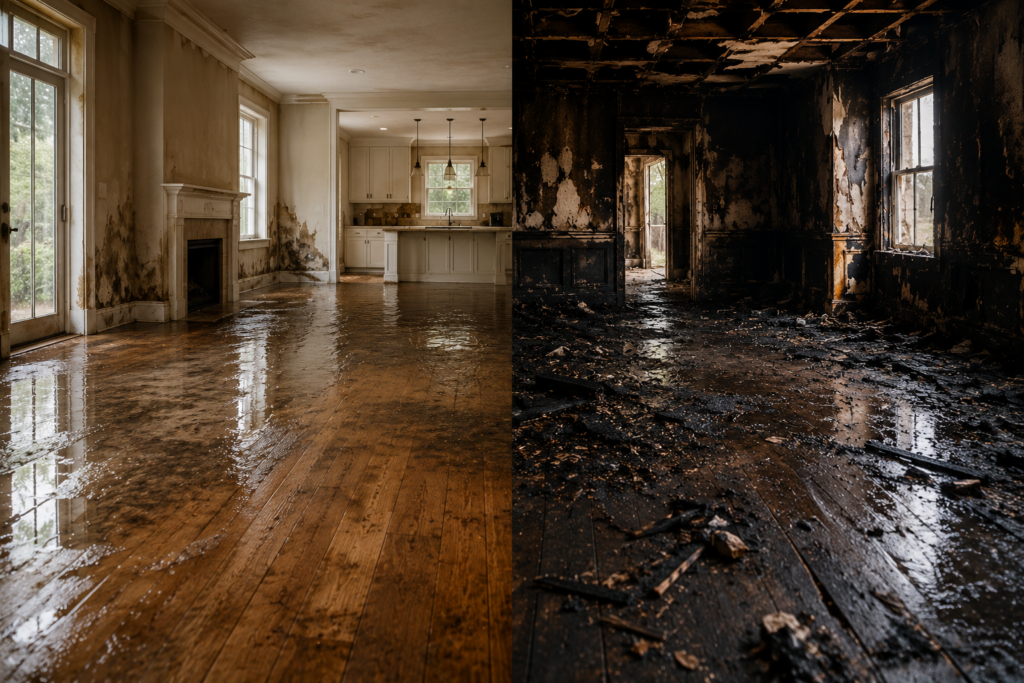
Water and fire damage often occur without warning, placing homeowners under immediate pressure to act. In these moments, many instinctively contact their insurance provider first. While notifying the insurer is an important step, doing so prematurely—or without adequate preparation—can complicate the water and fire damage restoration process, and negatively affect the outcome of a claim. Successful hardwood flooring restoration after catastrophic damage depends on a structured sequence of actions, expert assessment, and specialized technical knowledge. Missteps at the outset frequently result in delayed approvals, increased out-of-pocket expenses, or incomplete repairs.
Act Quickly — But Follow the Correct Sequence
A common misconception is that insurance should be the very first call after water or fire damage occurs. While reporting the loss is necessary, stabilizing the damage immediately is the priority. Water intrusion must be mitigated promptly to prevent swelling, mold growth, and structural deterioration. In fire-related incidents, smoke and soot must be contained before they spread into porous materials. Qualified remediation professionals are trained to secure the property, halt secondary damage, and prepare the site for restoration while preserving the evidence required for an insurance claim.
Why Professional Documentation Is Essential
Insurance determinations are driven by documentation. Without comprehensive and accurate records, homeowners risk reduced settlements or denied claims. Professional remediation assessments typically include moisture readings, structural evaluations, and inspections for concealed damage beneath finished flooring. Conditions are documented through photographs, measurements, and detailed reports—materials that insurers rely on to establish scope and causation. Thorough documentation ensures that the full extent of damage is properly recognized and addressed.
Understanding Coverage Limitations and Policy Nuances
Many homeowners assume their insurance policy guarantees full replacement of damaged flooring. In reality, coverage varies significantly based on policy language, causation, and response timing. In some cases, insurers authorize only partial repairs, resulting in mismatched materials or compromised aesthetics. In others, delayed mitigation leads to mold or secondary damage that falls outside coverage altogether. A clear understanding of exclusions, limitations, and response requirements helps homeowners set realistic expectations and avoid costly surprises.
The Complex Reality of Flooring Restoration
Restoring hardwood flooring after water or fire damage involves far more than replacing visible boards. Subfloors must be evaluated for moisture infiltration, structural movement, microbial growth, or smoke absorption. Specialized drying and monitoring equipment is often required, and different hardwood species respond differently to environmental stress. Experienced remediation contractors are able to determine when flooring can be salvaged and when replacement is the only viable option, while ensuring compliance with insurance guidelines and long-term performance standards.
Common Mistakes That Undermine Insurance Claims
In the aftermath of water or fire damage, homeowners often make decisions that unintentionally weaken their insurance claims and complicate restoration efforts. These errors typically arise from misunderstanding how insurance processes, remediation protocols, and structural repairs intersect.
Delaying remediation is among the most damaging mistakes. When action is postponed—often while awaiting insurance direction—damage continues to spread. Moisture penetrates deeper into subfloors and framing, while smoke residues migrate into surrounding materials. This secondary damage is frequently classified as preventable, which can result in reduced coverage or claim denial.
Another frequent issue is relying exclusively on insurer-recommended, low-cost contractors. While these vendors may meet minimum insurance requirements, they are often selected for cost efficiency rather than technical specialization. In complex flooring restorations, this approach can lead to insufficient drying, incomplete subfloor evaluation, or incompatible repair methods—issues that surface later and fall outside insurer responsibility.
Insufficient early documentation is also a critical oversight. Visible damage rarely tells the full story; moisture intrusion and structural compromise are often concealed. Without prompt, professional documentation, insurers may underestimate the scope of loss, leading to limited payouts or disputes.
Finally, many homeowners incorrectly assume that insurance policies guarantee full replacement of damaged flooring. Coverage decisions are governed by policy terms and causation, not homeowner expectations. When damage is classified as partial or avoidable, insurers may approve repairs that fail to restore visual continuity or structural integrity, leaving homeowners with additional costs that could have been mitigated through early expert guidance.
Collectively, these mistakes can significantly diminish claim value and compromise the durability of the restoration. A disciplined, informed approach—supported by professional remediation expertise—protects both the investment and the integrity of the repair process.
Selecting the Right Contractor Is Critical
Insurance-related restoration work requires a careful balance of technical expertise, craftsmanship, and administrative competence. Contractors must be capable of communicating effectively with adjusters, justifying the scope of repairs, and executing restoration work to a high standard. Homeowners who prioritize the lowest bid often encounter long-term issues such as uneven flooring, persistent odors, moisture recurrence, or structural concerns. Engaging a contractor with specialized remediation experience ensures the home is properly restored and protected against future complications.
Conclusion: Informed Action Protects Both Your Home and Your Claim
Water and fire damage are inherently stressful, but informed decision-making significantly influences outcomes. Before contacting insurance, homeowners should prioritize stabilizing the damage, engaging a qualified remediation specialist, and ensuring comprehensive documentation is in place. By working with professionals who understand both restoration and insurance processes, homeowners safeguard their investment, reduce unnecessary risk, and ensure repairs are completed correctly from the foundation up.