
Fixing Squeaks and Loose Boards Before Summer Entertaining
Summer entertaining is just around the corner, and we’ve all been there: guests are over, and suddenly every step seems to come with a soundtrack of squeaks and creaks. It’s a little embarrassing, right? Before we start opening our doors for barbecues and gatherings, let’s take a look at how we can quiet those noisy floors and fix any wobbly boards. We want our homes to feel solid and welcoming, not like a haunted house with every footfall. Tackling these small issues now means we can relax and enjoy the company without those annoying floor sounds drawing attention.
Key Takeaways
- We can stop squeaky floors by finding where the noise is coming from and using simple fixes like shims or screws. These floor repair solutions are usually straightforward.
- Loose floorboards can be secured by adding extra support underneath or by using specific fasteners to hold them tight. These floor repair solutions make the floor feel much more stable.
- Taking care of floor noises and loose boards now means we’ll have a more pleasant home for guests and ourselves during the busy summer entertaining season.
Addressing Annoying Floor Noises
We’ve all been there, right? You’re trying to have a quiet evening, or maybe guests are over, and suddenly, squeak, squeak, squeak with every step. It’s enough to drive anyone mad, and it definitely doesn’t set the right tone for entertaining. Before summer kicks into high gear and we’re hosting barbecues and gatherings, it’s a good idea to tackle these irritating floor noises. We need to figure out what’s causing them and then get them fixed.
Identifying the Source of Squeaks
Finding the exact spot where the noise is coming from is the first step. Sometimes it’s obvious, but other times it can be tricky. We usually hear squeaks when two pieces of wood rub against each other, or when a nail loosens and moves within the wood. It could be the floorboards rubbing against each other, or the floorboards rubbing against the subfloor, or even the subfloor rubbing against the joists. We’ll want to walk around the area where the noise is happening, paying close attention to where the sound originates. Having someone else walk while you listen can be helpful. Sometimes, a visual inspection can reveal gaps between floorboards or areas where the wood looks worn.
Implementing Effective Floor Repair Solutions
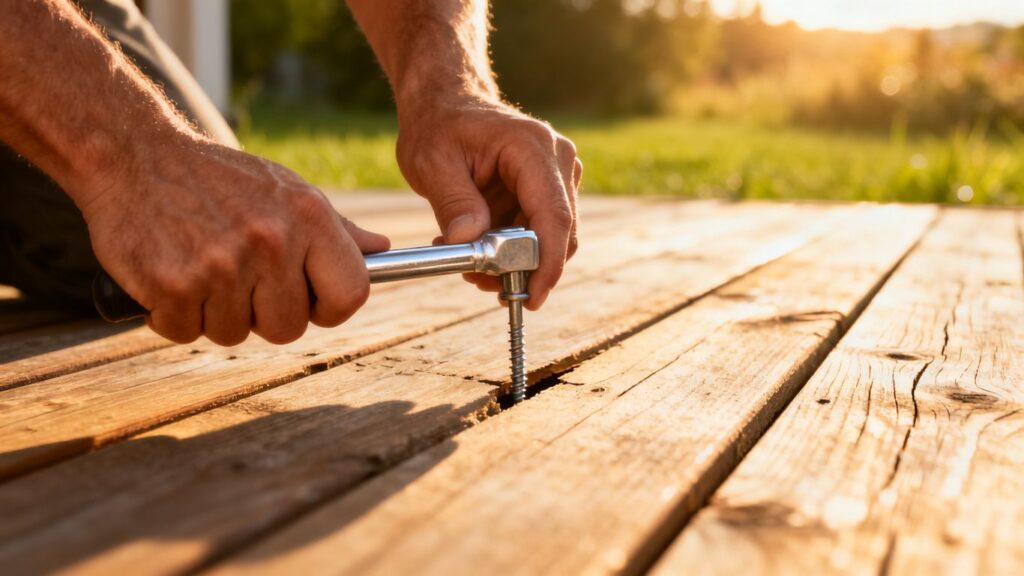
Once we’ve pinpointed the squeak, we can try a few things to quiet it down. For simple squeaks between floorboards, we can sometimes use powdered graphite or talcum powder. We just sprinkle it into the cracks, and then walk on the area to work it in. This can lubricate the wood and stop the rubbing. If the squeak is coming from a loose nail, we might be able to drive a new nail nearby to hold the board down more firmly. Another trick is to use a screw. We can carefully drive a screw through the floorboard and into the subfloor or joist. To hide the screw head, we can use a countersink bit and then fill the hole with wood putty.
Fixing these noises doesn’t always require a professional. With a little patience and the right approach, we can often silence those annoying squeaks ourselves, making our homes much more pleasant.
Here are some common solutions we can try:
- Lubrication: For squeaks between boards, try talcum powder or graphite. Sprinkle it in the gaps and work it in by walking on the area.
- Securing Loose Nails: If a nail is the culprit, try hammering it in further or even replacing it with a new one.
- Screwing Down Boards: For more persistent squeaks, driving screws through the floorboard into the subfloor or joist is often effective. Remember to countersink the screw heads.
- Shims: In some cases, thin shims can be inserted between the subfloor and joist to eliminate movement and noise.
Securing Loose Floorboards
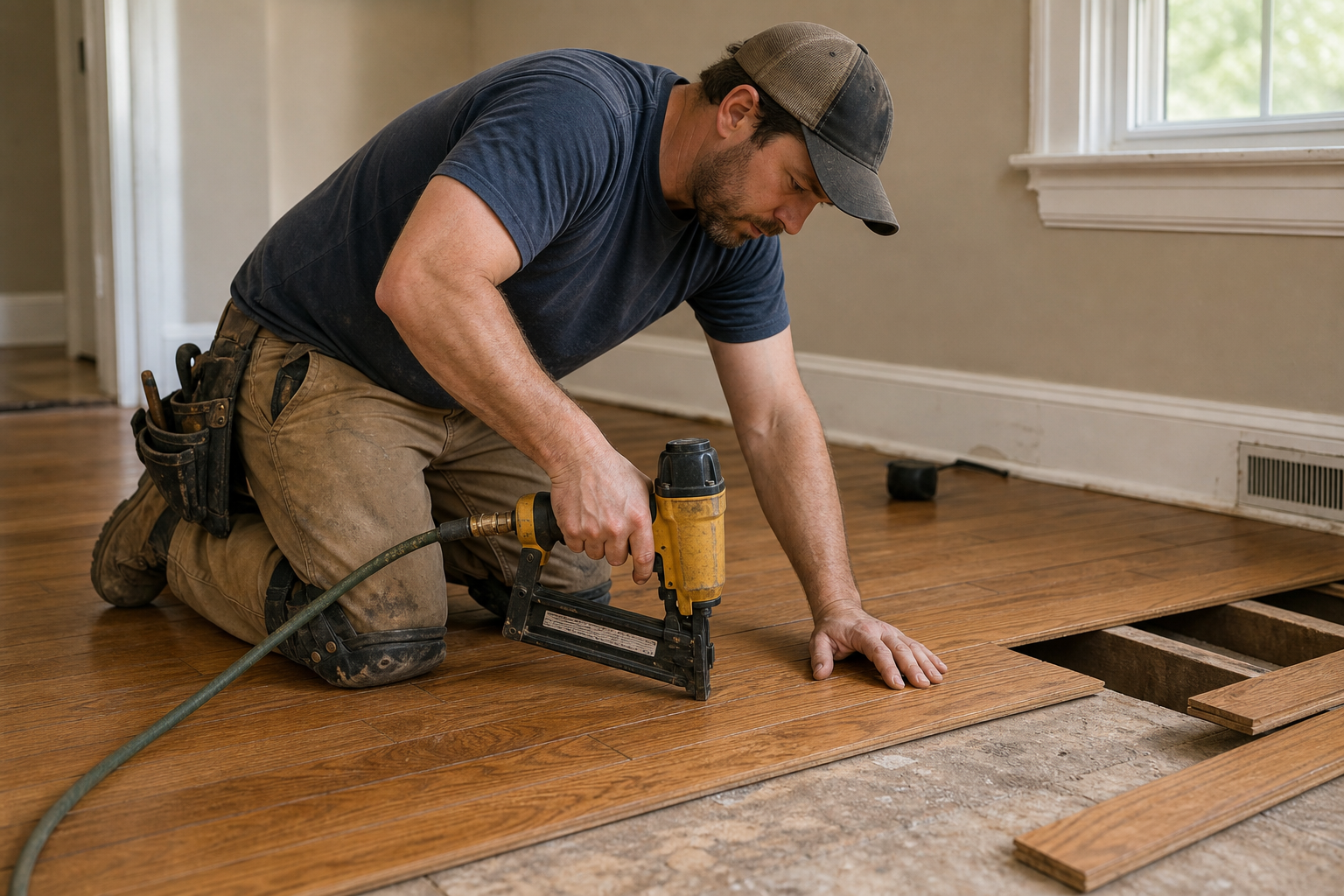
Loose floorboards can be more than just an annoyance; they can be a tripping hazard and a sign of underlying issues. Before your summer guests arrive, let’s get those wobbly planks secured.
Reinforcing Wobbly Planks
When a floorboard feels loose, it usually means there’s a gap between the plank and the joist it’s supposed to be resting on. We can fix this by adding support.
- First, identify the exact plank that’s loose. Walk around and press down on each board until you find the culprit. Sometimes, it’s just one board, other times a whole section might feel spongy.
- Check for nails or screws. Often, loose boards are just missing a few fasteners. If you see old nail holes, try driving in a few new screws or nails to secure the plank to the joist below. Use screws that are long enough to go through the floorboard and into the joist, but not so long that they poke through the other side.
- Use shims. If the gap between the plank and the joist is noticeable, we can use wood shims. These are thin pieces of wood that we can slide into the gap. Once they’re snug, we can glue and nail or screw them in place. This fills the void and gives the floorboard something solid to rest on again.
Sometimes, the subfloor itself might be the issue. If the subfloor has warped or is damaged, it won’t provide a stable base for the finished floorboards, leading to looseness.
Exploring Advanced Floor Repair Solutions
For more persistent or widespread looseness, we might need to look at more involved methods. These are usually for when the simple fixes don’t quite do the trick or when the problem affects a larger area.
- Bridging the gap: If a joist has settled or warped, we can sometimes add a “sister” joist next to it. This is essentially a new piece of lumber that runs parallel to the existing joist, providing extra support. We’ll secure it firmly to the original joist and the surrounding structure.
- Subfloor reinforcement: If the subfloor is the main problem, we might need to add a new layer of plywood or OSB over the existing one. This adds rigidity and a solid surface for the floorboards. We’ll make sure to use the right thickness and secure it properly with screws.
- Floorboard repair kits: There are specialized kits available that can help pull loose floorboards down tight. These often involve screws that are driven at an angle through the edge of the board into the joist, and then the screw heads are covered with a wood plug or putty. This is a cleaner look than just adding more visible nails.
We want to make sure our floors are solid and safe before any summer gatherings. Taking the time now will prevent headaches later.
Ready for Guests
With these simple fixes, we’ve made our homes ready for summer gatherings. No more creaky floors or wobbly steps to worry about when friends and family come over. We can relax and enjoy the season, knowing our homes are safe and sound. It feels good to get these little things done before the busy entertaining season really kicks off.
FAQs
Squeaks usually happen when parts of the floor rub against each other. This can be the floorboards moving against the nails, or the subfloor shifting against the joists. Over time, the wood can dry out a bit, or the nails might loosen, creating little gaps where friction can start.
For a quick fix, we can sometimes sprinkle a bit of talcum powder or graphite powder into the cracks between the boards. This acts like a lubricant, reducing the friction that causes the squeak. It’s not a permanent solution, but it can definitely quiet things down for a party.
Walk slowly across the noisy area while listening for the point where the sound is strongest. It can help to have another person walk across the floor while you listen from nearby or, when accessible, from underneath the floor. Look for movement, worn areas, loose fasteners, and visible gaps between boards.
Screws often provide a stronger and more durable hold than nails because they are less likely to loosen as the floor moves. A screw can be driven through the floorboard into the subfloor or joist, then countersunk and covered with matching wood putty.
Yes. The subfloor provides the stable base beneath finished flooring. If it is warped, weakened, improperly secured, or damaged, the floorboards above it may move, squeak, or feel unstable.