
Mold On Your Hardwood Floors Is A Serious Threat!
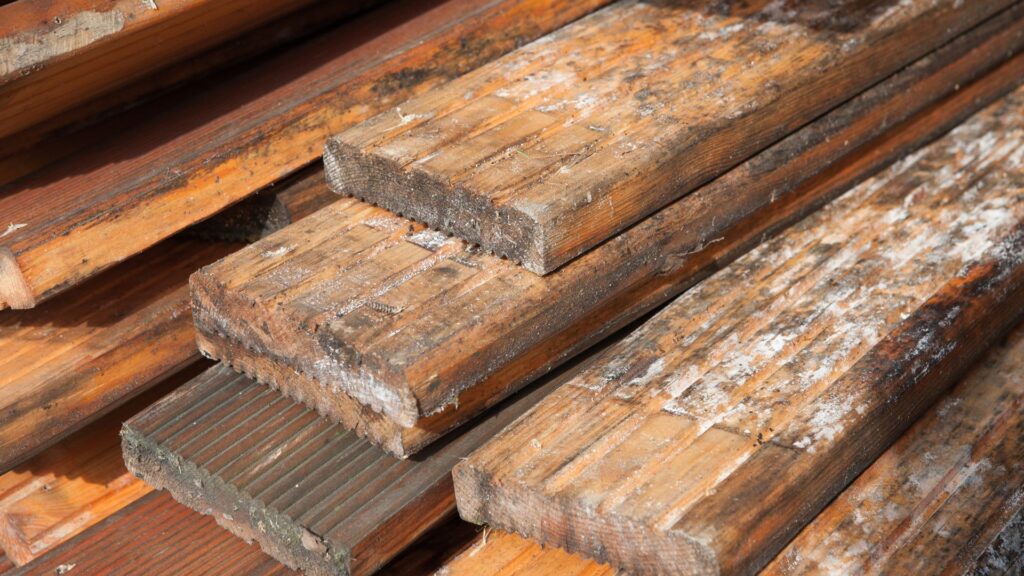
Most people know that mold isn’t good. From an aesthetic perspective, mold is not pretty to look at, and from a health perspective, it’s even worse!

In fact, ignoring the presence of mold, especially on your flooring, can be extremely detrimental and hazardous to you and your family's health, including to your precious pets!
Certain types of mold, such as “black” mold, produce chemicals called “mycotoxins”, which can cause nonspecific health symptoms associated with “Sick Building Syndrome” or “Chronic Inflammatory Response Syndrome”. It has also been suspected of causing Idiopathic Pulmonary Hemorrhages among infants although this has not been scientifically proven.
Aside from possible toxicity, “black” mold (or any indoor mold for that matter) produces spores that can cause upper respiratory issues resembling allergies or asthma.
Below, you will find some warning signs to look out for, especially if you recently experienced a water leak or flooding, including:
- Discoloration
- Water Stains
- Water Damage
- Musty Smells
- Creaky Floorboards
- Buckling or Warping
- Health Symptoms Associated w/ Mold Exposure.

OTFC (Olde Tyme Floor Company) would like to educate you that ANY of these signs by themselves can include other causes. However, if you notice several of these signs at the same time, it should strengthen your suspicions that mold growth may be growing on or underneath your hardwood floors. As professionals who deal with such situations, OTF believes that the only way to know for sure is to carefully have us remove the floorboards in the area where you suspect mold is growing underneath.
Why is mold growing on your floors?

Mold growth always starts with ONE thing. Perhaps, it’s not difficult to guess that it’s MOISTURE.
If your flooring is exposed to any amount of excess moisture, it could be in the form of a water leak, condensation, steam, or humidity, there’s a high probability that mold can grow. As you can imagine, cleaning-up spills and leaks quickly could help prevent mold growth.
However, if you couldn’t dry your floors thoroughly enough, this could lead to a mold outbreak. Once mold starts to grow on, or, underneath your flooring, it can cause staining and buckling. More unpleasant than this is that mold can cause parts of your hardwood floors to rot.
How can you realize the presence of mold?
In most cases, the formation of mold on your flooring is readily visible to the naked eye. You might notice patches of discoloration (usually black or green in color, mold can grow in a variety of different colors) including a slimy or fuzzy texture. Nevertheless, mold isn’t easily seen if it’s growing under the floorboards, on the floor joists, or on the subfloor.
But what if you still cannot correctly identify if you have mold?
When we were preparing the answer to this question, we immediately remembered an article from https://hardwoodfloorsmag.com/, where the builder, flooring contractor, and flooring distributor were ALL confused with the “black” spots on the 3.25” wide, Red-Oak Floors.

None of the (3) professionals was able to remove the black-spots (mold), and, none of them knew where it was coming from. They all assumed that it was a batch of “bad wood!”. Thankfully, a flooring inspector volunteered to drive to Central Massachusetts to inspect the floor solely out of curiosity and take on the challenge of the phrase “No one knows what this is”.
The homeowner, considered by the builder, flooring contractor, and distributor to be “difficult,” came off to the flooring inspector exactly as such. The most interesting point here is that the flooring inspector knew that it wasn’t just molded from looking at the first photos he had viewed via text. So, let’s settle this right now regarding the mold:
Mold does NOT want to live on a dry, urethane-coated, foodless surface. Common “black” mold (Stacybotrys) needs 60%+ relative humidity, a temperature of 40–100 degrees Fahrenheit, oxygen, and food (organic material to consume) which will make it grow as mold HATES dryness!
In review, mold can be a consequential threat! Mold can be serious and “yes”, it affects some people far more seriously than others. To summarize, there is no such thing as “good” mold in your home: a mold of any type is NOT good. However, mold doesn’t like well-acclimated, clean, dry hardwood flooring.
When you have “black” spots on your hardwood floor that are NOT growing and spreading, and can simply wipe the floor clean, it’s NOT mold. Otherwise, you may have other issues, and they are likely not very serious. (This floor had black stains throughout)
Upon inspection, it was determined that neither the builder, hardwood flooring contractor or flooring distributor was at fault and thankfully these floors could be repaired! So what exactly caused these black spots? Some facts about this case for your consideration:
- The black stains were not molded (as they were not visible to the flooring contractor until after the floor was coated)
- The stains did not continue to spread.
- The spots were not from manufacturing or in the wood
- The spots were ONLY prominent in the open-concept Kitchen, Living room & Dining room.
- Nothing showed up in the entry, foyer, halls, and bedrooms.
- The pantry and basement stairs DID have spots.
- The basement stairs were made of Yellow Pine that WASN’T finished by the flooring contractor.

Well, it’s time to reveal the origin of these black spots:
Chemicals present in the floor coating process (water, formic and acetic acids, and others) can stimulate electrochemical cell activity, which also accelerates the rate of corrosion between metal and wood. Such chemicals can create lower oxygen levels, which also tend to create “black” rust. The chemical compounds found in waterborne flooring finishes can speed up the corrosion process more than just water. This might support the claim that the black spots were multiplying.
Upon further testing, metal filings from the same brand of scraper blade were added to (4) different types of wood floor finishes and applied to Red-Oak flooring.
Normal living conditions were established: 68 degrees F at 32% relative humidity (RH).
Surprisingly, the black spots did not develop, nor did they appear when the finish was applied to sealed red oak flooring. An oil-based polyurethane finish was also tested as a control and NO spots formed. However, black spots did form on a piece of Red-Oak that was NOT part of the testing.
During the testing phase, some waterborne floor finish accidentally spilled on a scrap piece of Oak where the scraper had been sharpened, and these spots WERE exactly as seen on the claimed floor! The difference appeared to be whether the metal shavings were worked into the open grain of the freshly sanded wood. Wood fibers will conduct the flow of electrons much like wire. This electrical flow causes metals to break down and rust, thus explaining the importance of the metal actually coming into contact with raw wood fibers. When they were in contact and the waterborne finish was applied ...
Kaboom! Spots!
The wood itself was physically and chemically crucial to the corrosion process. Once this process was recreated, all (4) waterborne finishes rapidly created black rust spots!
Furthermore, tests showed that the finish films made with finish and metal shavings showed NO rust, yet when Oak dust as added to the mix, the results CONTAINED black corrosion.