
Hardwood Floor Restoration
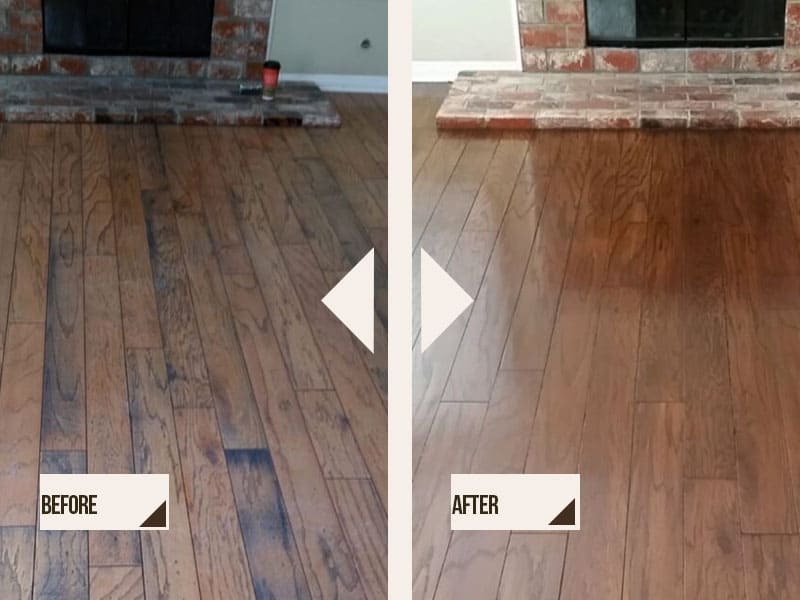

If your home features hardwood floors, it’s more than probable that you’ll wish to know as much as possible about the care those floors require. Indeed, you may have already done some research on basic maintenance such as which cleaning agents to use, how to use them, and how often. However, over time, you’ll come to realize that everyday cleaning is no longer sufficient. Perhaps the floors have lost their luster, or, maybe they’ve developed scratches or dings, or, other forms of damage that are too noticeable these days for your liking. If this is the case, the time has arrived for more detailed restoration.
Restoration is a big word that covers a lot of territories. Rather than let it frighten you, however, we’ll attempt to subdue it by exposing a bit of information you may have missed.
What is the restoration process for hardwood flooring?
The minute details would keep us here for a long time; thus, for neatness’ sake, let’s examine two of its largest components: Recoating and Resurfacing.
Hardwood Floor Recoating
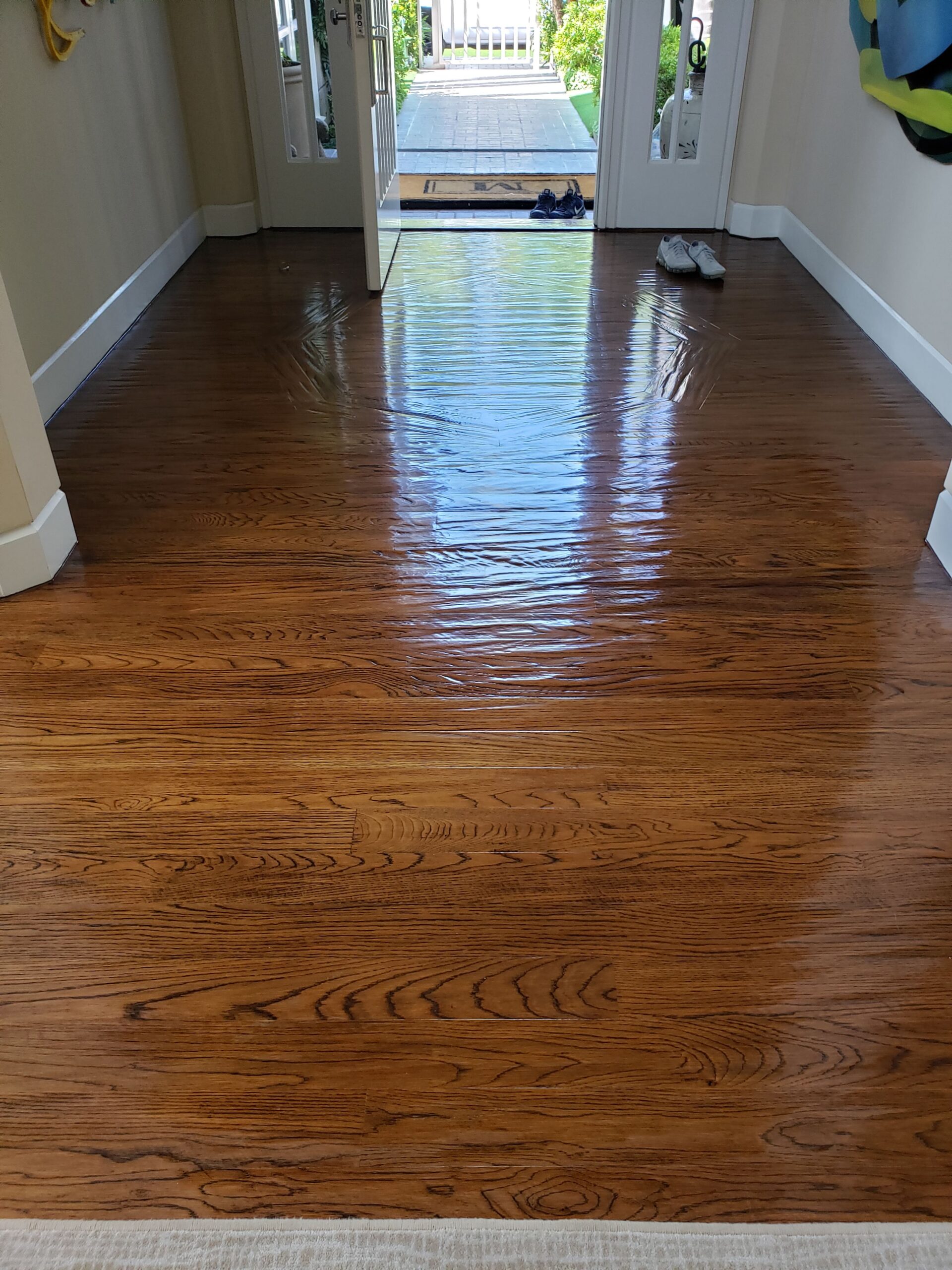
You probably wash your car at least once a week. Moving a step beyond that, you’ll need to wax it from time to time. This second procedure restores the body’s shine and protects it from the elements. In a manner of speaking, the same holds true for hardwood floors.
Beyond basic cleaning, the occasional re-coat is needed to maintain their beauty.
To recoat your floors, we would conduct the following tasks:
- Move/Replace the furniture
- Sweep/Vacuum the floors
- Prepare the soap (we provide) with warm water
- Damp-mop the floors until they’re fully clean
- Make certain the floors are COMPLETELY DRY
- Abrade floors by hand or with a buffer, depending on how sensitive the floors are
- Vacuum
- “Tack-down” floors until completely void of dust-particles
- Apply a single coat of hard wax oil
- Buff-off after about 15 minutes
- For a higher sheen, a second coat of hard wax oil may be applied
In cases where polyurethane is being used instead of a Hard wax Oil, the following steps would be taken:
- Move/Replace the furniture
- Sweep the floors
- Abrade floors by hand or with a buffer, depending on how sensitive the floors are
- Vacuum
- “Tack-down” floors until completely void of dust-particles
- Apply (2) finish-coats of commercial-grade polyurethane
FYI: Polyurethane comes in different “sheen” levels. The finish can shimmer like glass or be more consigned to subtlety. The different sheen levels are:
Matte, Satin Semi-Gloss, and High-Gloss.
It should be noted that the higher the sheen-level you choose, the more time-consuming upkeep will become.
Hardwood Floor Resurfacing
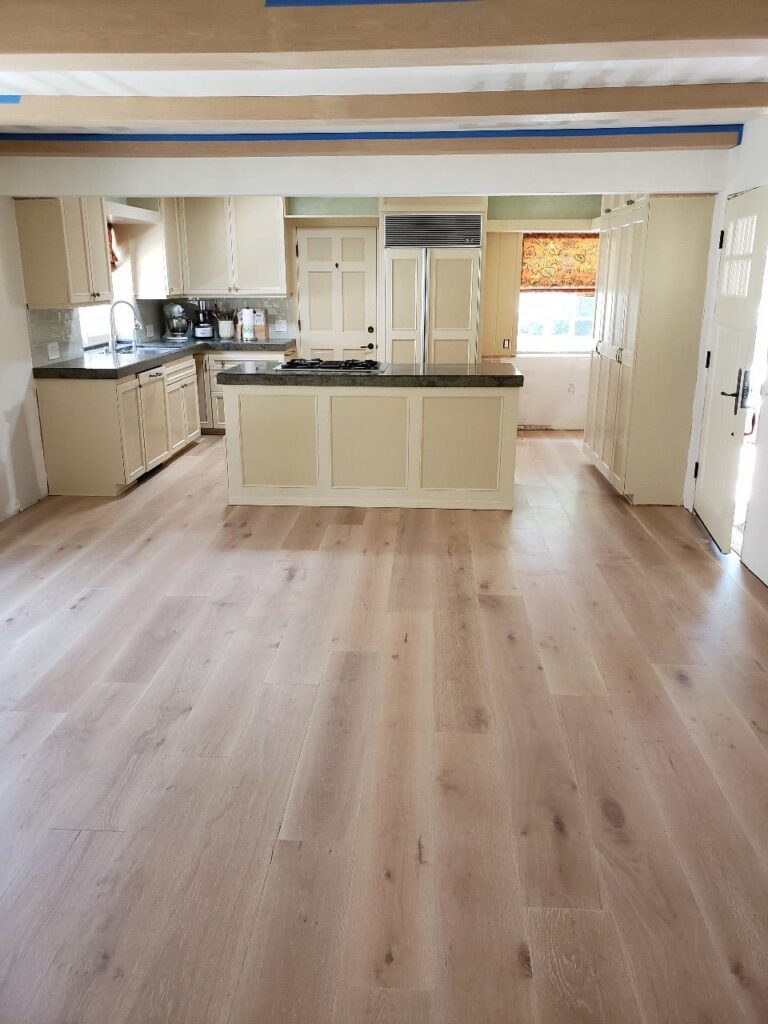
To resurface hardwood floors is to sand everything down to the raw wood itself.
The old finish, including the stain-coat, is completely removed, along with most, if not all the cosmetic imperfections—scratches, nicks, chips, dings—that might have distressed you to the point where resurfacing became necessary.
In return to the above reference, this kind of procedure on a car would mean stripping the body down to the bare metal, from which point a number of options become available in terms of colors and finish.
When we resurface your hardwood floors, we also start at the very beginning, by sanding the floors several times, working our way through the resurfacing process, and then, into the finishing process, which covers the restaining and refinishing aspects of the process, covered in the previous section. Not only does resurfacing render your floors to pristine or near-pristine condition, but it also provides the opportunity to stain them to the shade of your liking. Tones can move from light to dark, with many shades in between.
Depending on the condition of your hardwood floors, the resurfacing process may need to take place about once every 10 to 15 years.
Hardwood Floor restoration done right is a rejuvenation.
Through the services we provide, the floors’ former glory is recaptured, while you, in turn, are set free from what visible damage and other signs of age might have troubled you.
To find out more about proper care for your hardwood floors, contact Olde Tyme Floor Co. today.