
Delamination in Engineered Wood Flooring: Causes, Solutions, and Prevention Tips
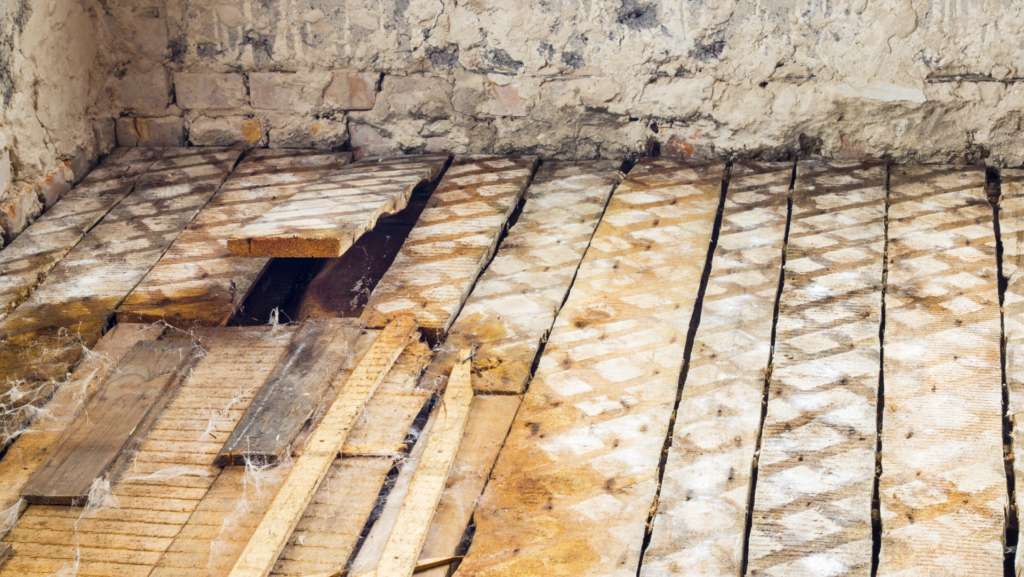
Take a look at these photos...
Thoughts like this immediately pop into one’s head:
"Oh, my Godness, how much money will it cost to fix all the defects of this flooring?"
or
"Well, we’ll install carpet instead of having the same problems with a hardwood floor!"
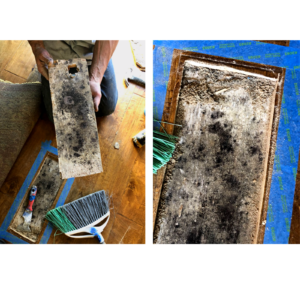
In the following photos, the inspector is holding a cut-out board that shows the presence of black mold, which is visible to the naked eye, resulting from the installation of the floor with the use of two-part adhesive in an unsuitable excessively, high-moisture, environment.
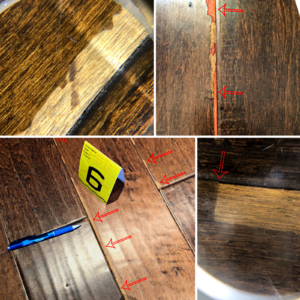
Did you figure out what kind of issues are happening with the floors in the photos?
Yes, you are right, this is called “delamination”!
Delamination is a mode of failure where material fractures into layers.
It takes place when the wood veneer or the surface layer separates from the backing material of a wooden floorboard.
This problem can occur when homeowners pick engineered, wood flooring for their house, condominium, or apartment.
The homeowner stated the following facts:
- In 2014, the homeowner had 9/16” x 5” wide, prefinished, engineered, Maple plank flooring with hand-distressing installed.
- In 2016, they noticed delamination marks in the dining room.
- By April 2018, flooring delamination and peeling were observed in various locations throughout the premises, mostly in the hallway, living-room, and dining-room (Approximately 25-30 delaminated wood-flooring planks).
First and foremost, delamination may affect floors where water penetrated into the engineered flooring, spreading between individual layers, thus damaging them and resulting in the loss of their mechanical bond.
However, in this case, everything is not as simple as it seems…
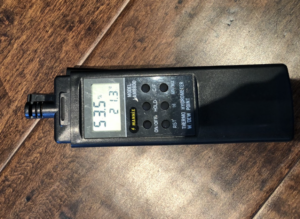
This photo shows the inspector taking readings of the temperature and the relative humidity at the premises in question.
Temperature: 21.3 Degrees Celsius (approx. 70.34 Degrees Fahrenheit)
Relative Humidity: 53.5%
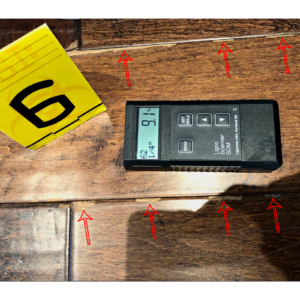
In this inspection photo, you can see the measurement of the readings of the wood floor in the TV room using a non-invasive, Ligno Scanner SDM Device.
The readings showed a moisture content of 9.1% at a depth of ¼”, which is considered “normal”.
Note: Despite this, both the stain and the finish peeled away exposing the bare wood underneath.
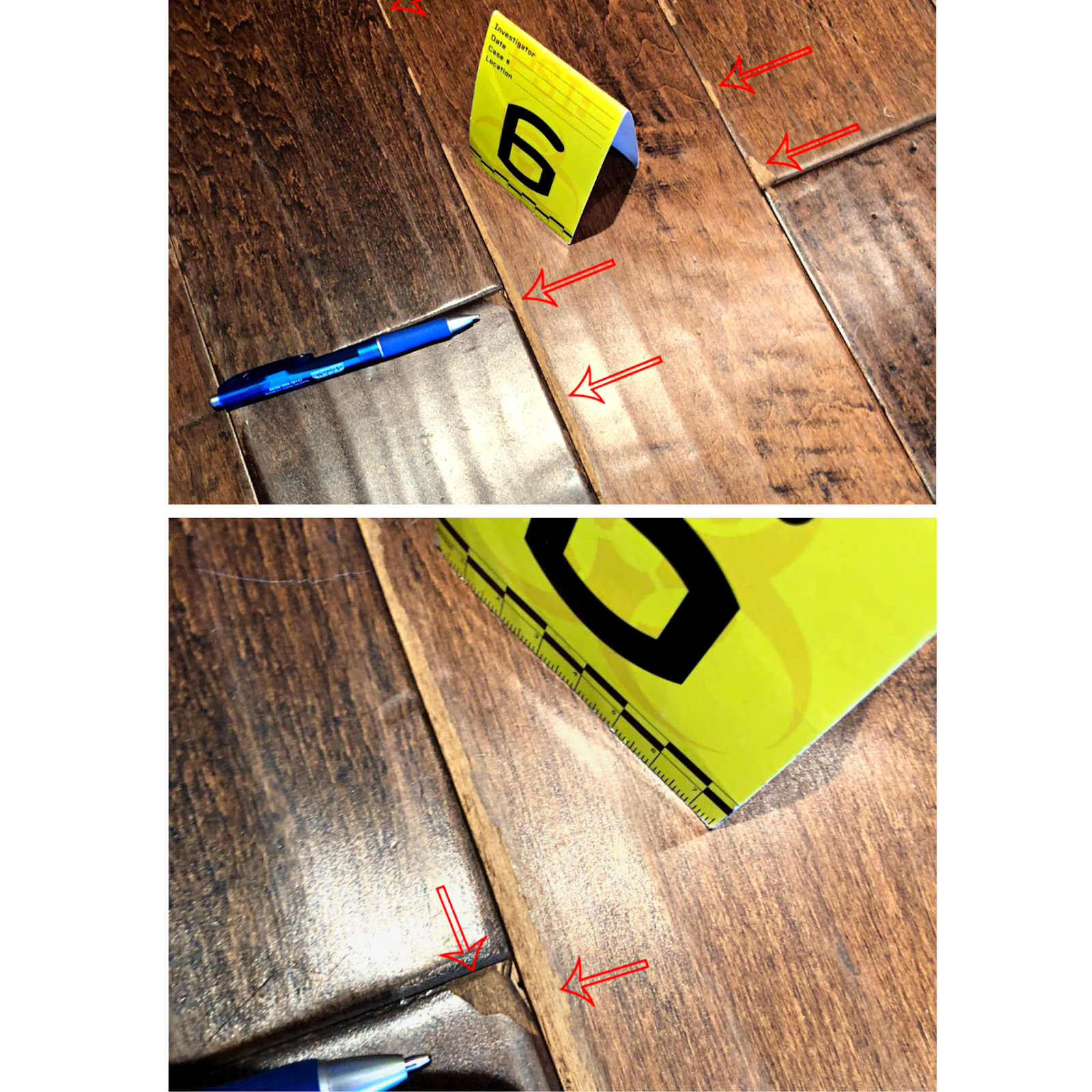
In the same area as in the previous photo, this photo shows the issue of delamination persisting on multiple planks and multiple areas within each affected plank.
In this zoomed-in view, the above image shows the issue of delamination up-close on (2) adjacent floor-boards. Additionally, this problem affected multiple planks.
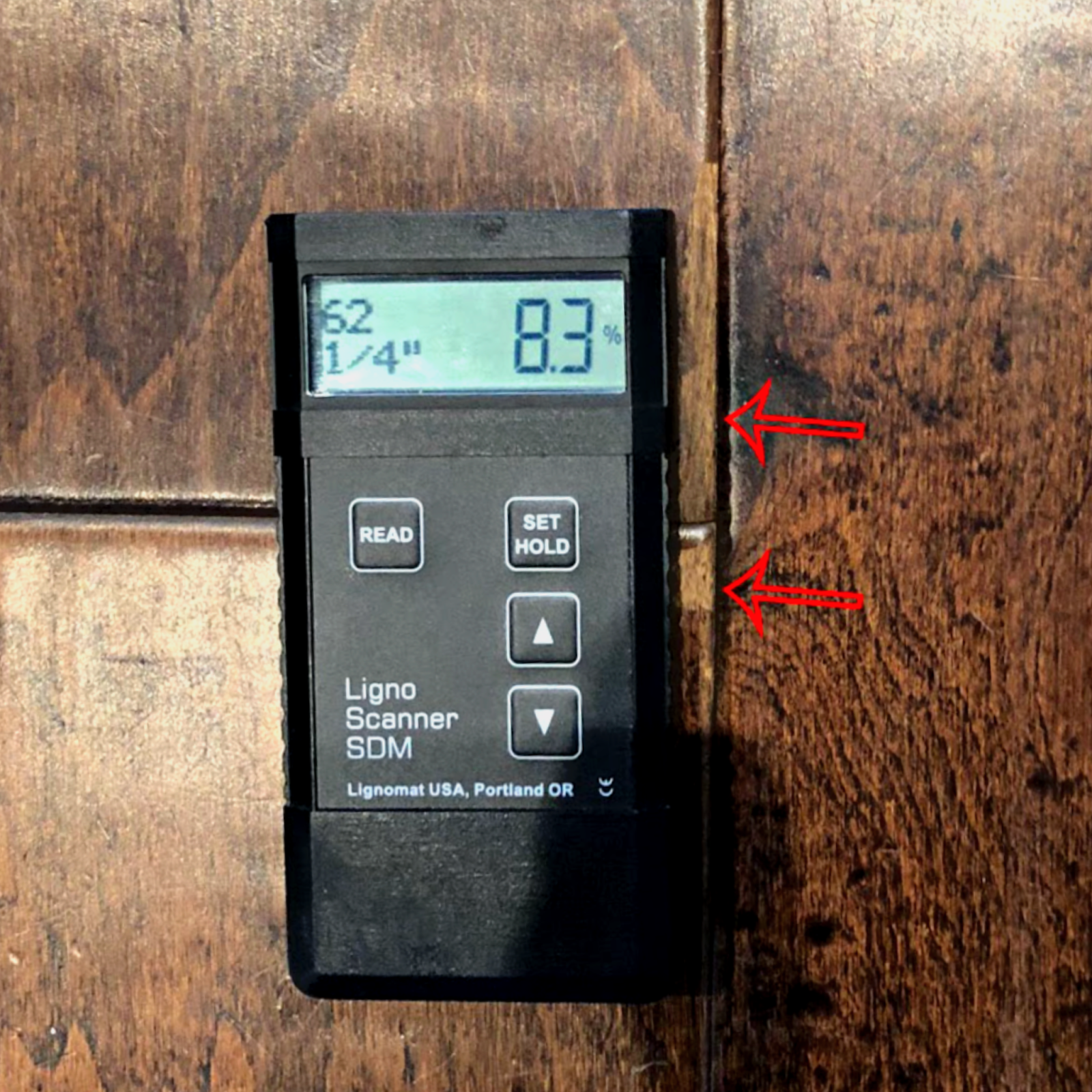
In order to eliminate the unfavorable environment as the root of the problem, the inspector took another reading of moisture-content within the floor using the same non-invasive method.
Here, the meter was positioned directly on top of an area where the finish delaminated: The results showed a moisture content of 8.3% at ¼” depth.
Once again, this is considered a normal level!
Considering these readings, we can no longer suspect moisture as the cause of the issues.
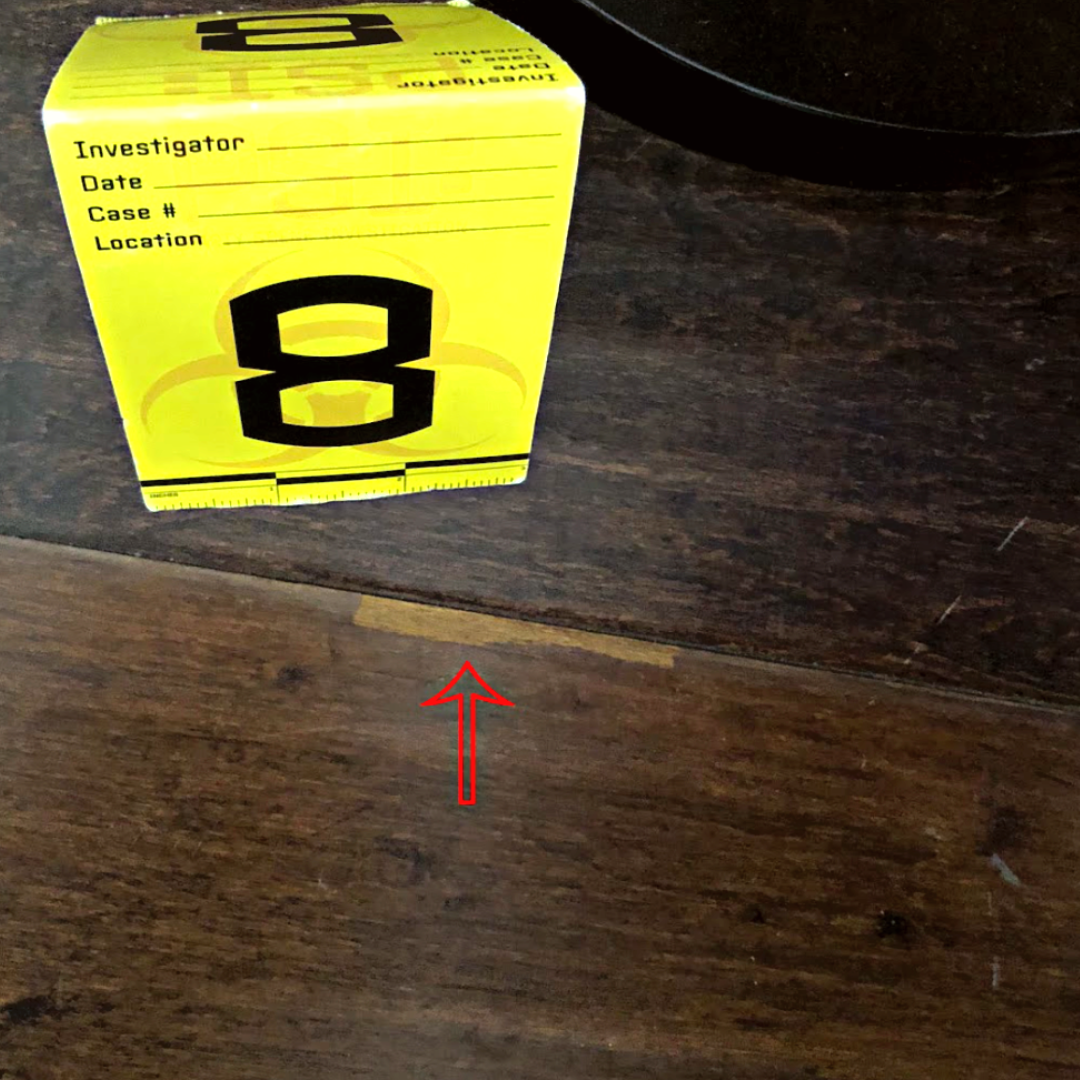
This image shows the delamination occurring in the Living Room as well, which is behind the homeowner’s couch.
And even in such a low-traffic area, it shows that the stain and finish are gone, exposing the bare wood.
This photo was taken with a magnifying device which shows a small piece of the floor finish that the inspector removed easily with a scalpel.
And in this photo, both the stain and finish have peeled away, exposing the bare wood.
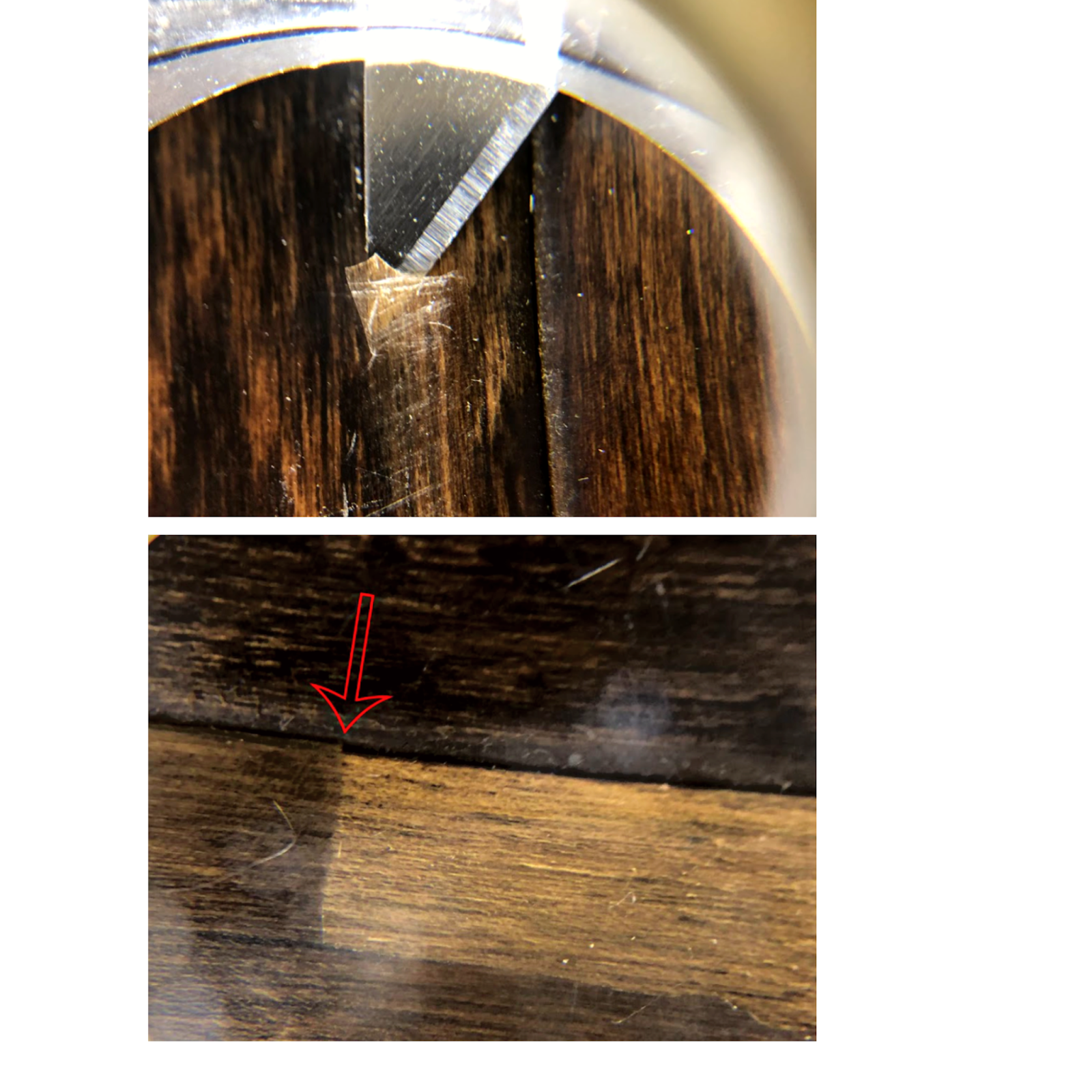
The biggest revelation here is that the findings of this inspection identified, that the Delamination of the flooring, stain, and finish was caused by the MANUFACTURER & the MANUFACTURING PROCESS.
Well, Olde Tyme Floor Company (OTFC) believes that the appropriate method to correct the defects would be to restore the exposed wood with a stain marker and recoat the flooring with a fresh coat of polyurethane.
We also recommend testing this method in a small area and waiting a period of 6 months to confirm that there is no failure.
In order to avoid all the problems above, you should first remember to check the guarantees of the manufacturer and pay attention to the guidelines of the given product.
As our case confirms - an engineered floor made with substandard materials including poor manufacturing is a frequent reason behind delamination.
However, when we’re talking about delamination, that’s not the only culprit.
-
Using The Right Adhesive
Other factors that result in such damage include poor adhesion, caused by using faulty adhesives, or, some sort of surface contaminant, which prevents good adhesion or a mechanical bond.
Moreover, the wood may also have a tendency to split due to faulty veneers and high ambient temperatures. Another important cause of delamination is installing floors on an uneven subfloor, as the floor-boards bend and stretch, causing stresses with the adhesive bond.
-
Cleaning Methods
Another equally important factor we all have to bear in mind can be the use of inappropriate cleaning methods:
For instance, using too much water, or, a failure to immediately remove spillages can cause delamination.
Such situations happen relatively often because hardwood floor owners frequently do NOT receive the required knowledge of how to properly clean their floors. This includes removing all dirt and dust, including protecting the floors against unnecessary damage. If you were to browse the Internet in search of engineered wood floor cleaning methods, you would find a whole variety of different methods and techniques that can be confusing.
However, before trying out any of these methods, please remember to always check if the source is reliable and that it's the proper way to clean the floors you have.
Moreover, read all the information carefully to avoid common mistakes, making sure that you use them correctly, and in accordance with the instructions.
If you fail to do so, the condition of your engineered wood flooring WILL deteriorate fast, shortening the life of your floors, and creating a need to replace them sooner than expected if you had cleaned the floors the correct way.
-
High Temperatures
Additionally, you can face delamination issues when there is excessive drying of the wood veneer, which is attributed to high temperatures coming from radiant heating, hot water pipes, skylights, etc.
Similarly harmful, too dry conditions can be a problem.
To make a diagnosis, try to ask yourself the following questions:
- Are any hot water pipes located underneath the floor?
- Do you have radiant heating?
- If yes, what’s the maximum temperature?
- What’s the temperature and humidity level in the room?
- Have you observed any other floor damage apart from delamination, such as the splitting of the veneer, or, shrinkage?
- Is the moisture level in the given room lower than in other areas where delamination did not occur? (which can suggest the need to check if there’s any localized heat source)
All in all, “delamination” is when the floorboard layers separate (between the surface veneer and the substrate).
As we previously mentioned, poor manufacturing standards, or, water seeping between the cracks and penetrating into the floor, for instance, due to improper maintenance, may be the reasons behind it.
To avoid problems, always request detailed warranty coverage from the manufacturer and stick to the specific maintenance guidelines outlined by the manufacturer.
Being “proactive” and preventing is always better, however, if you’ve already observed this type of damage to your floors, please call us immediately so we can help you solve your most challenging problems.
OTFC (Olde Tyme Floor Company) will take care of everything, including listening to ALL your wishes and never allowing any trouble to appear after the work has been completed.