
Can Hardwood Flooring Be Installed Over An Existing Hardwood Floor?
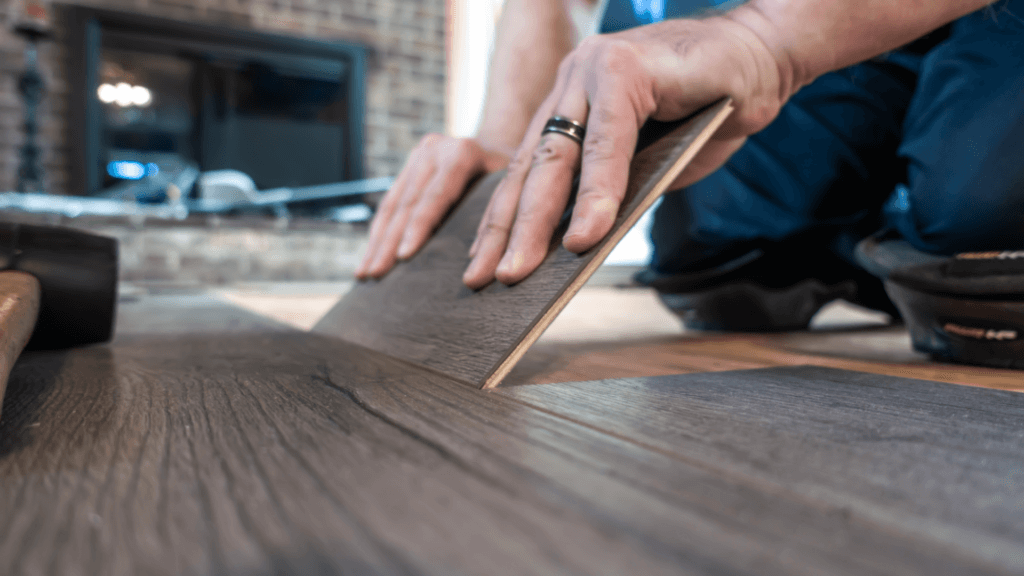
We were compelled to compose this article, which was originally written by Howard Brickman, the President of Brickman Consulting (based in Norwell, Massachusetts). Howard expressed his perspective on this subject in an article published in Wood Floor Business Magazine.
Please answer the question yourself: Is it possible to install hardwood flooring over existing hardwood floors?
The answer is “YES”, it is possible to install new flooring over existing ones. Nevertheless, there are divergent interests, as the primary motive behind installing hardwood flooring over an existing hardwood floor is frequently to economize by removing the previous floors and rectifying any concealed deficiencies after the new floor has been utilized. This will ultimately result in a decrease in the overall quality of the new installation. The constant battle between price and quality continues!
Howard suggested that the initial step is to conduct an evaluation of the existing hardwood floors.
The two primary points are:
- The condition and fastening of the existing hardwood floors, as well as the subfloor they are attached to.
- The moisture content of the existing hardwood floors, and the subfloor must be analyzed.
Other related issues include:
- Will the added thickness of the new flooring obstruct exterior doors, appliances, cabinets, plumbing fixtures, etc.?
- Will it pose a tripping hazard?
- Will it create an out-of-building code stair/riser condition?
- Are the existing wood floors so out of level, or, flat enough, that they will not meet the manufacturer’s or the flooring industry’s recommendations?
- Are the existing hardwood floors running in the same direction as the new hardwood floors that are proposed?
- Is the present hardwood flooring unsound or otherwise inadequate to serve as a suitable subfloor for the installation of the new hardwood flooring?
What is the return versus the risk?
The worst-case scenario for the flooring contractor is that they would have to replace the new wood floors, and in the process, correct all the deficiencies that should have been fixed in the first installation. The best-case scenario is that the flooring contractor completes the proper work and is paid, with no complaints during the statutory warranty period, including no derogatory social media posts.
Advice from Olde Tyme Floor
If you are contemplating the installation of new hardwood flooring and wish to install it over your existing hardwood floors, there exist two alternatives.
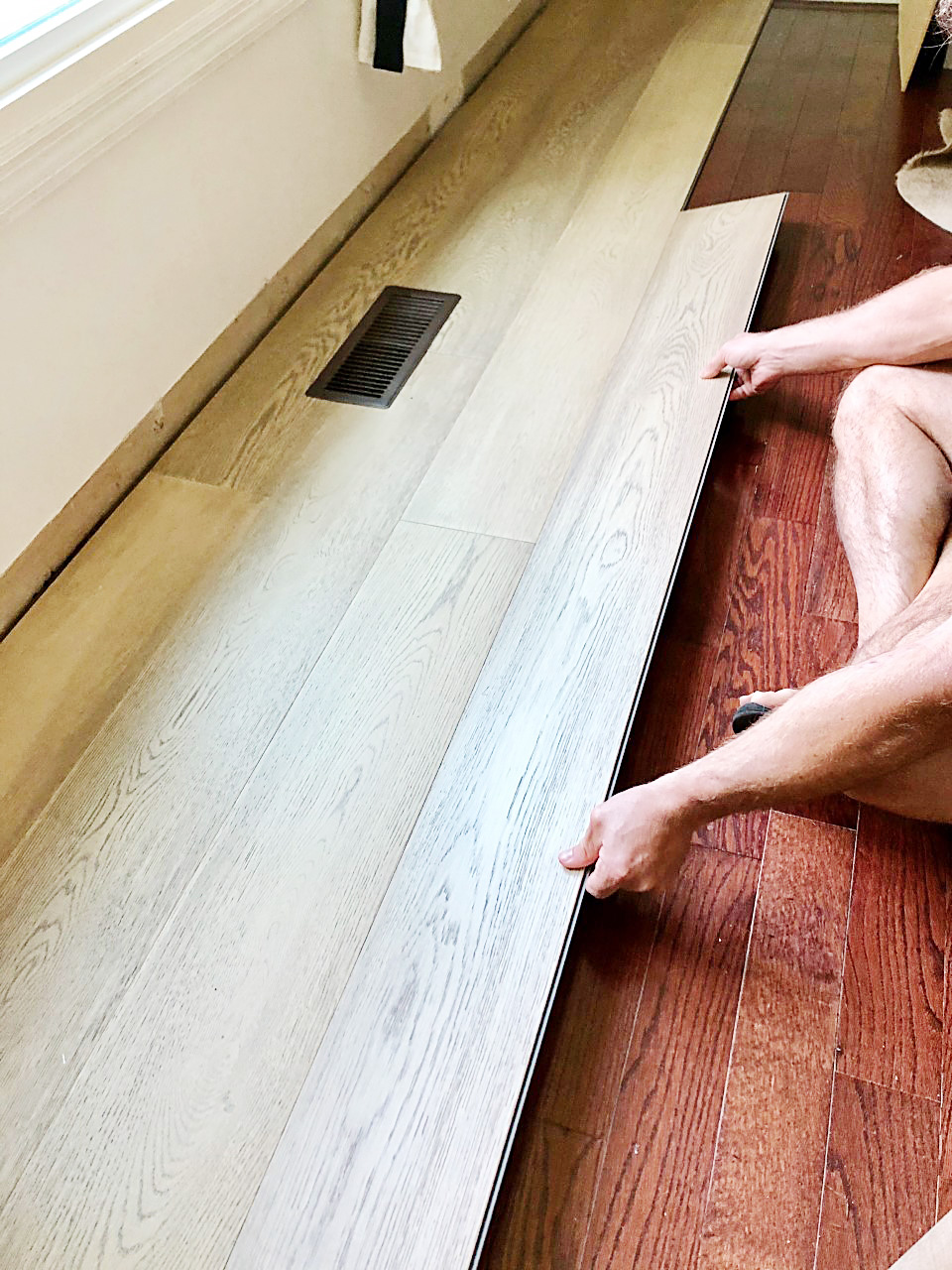
- Option #1: Install a hardwood floor with a locking system (tongue & groove), which allows it to float over your existing hardwood floor.
- Option #2: Your new flooring should be installed either diagonal, or perpendicular to your existing flooring.

This is the appearance that results from the installation of a floor that is perpendicular to the one below. It is evident that the edges of the planks are aligned at 90-degree angles.
Be aware of any red flags that may cause issues.
What does it mean to have red flags? For example, please do not glue your new flooring over existing strip-flooring or plank flooring because ALL hardwood floors will expand and contract with seasonal changes. You will either have to remove the existing hardwood flooring or install a minimum 1/4 approved plywood subfloor with adhesive.

Kindly ensure that the existing floorboards are flat, level, and dry.
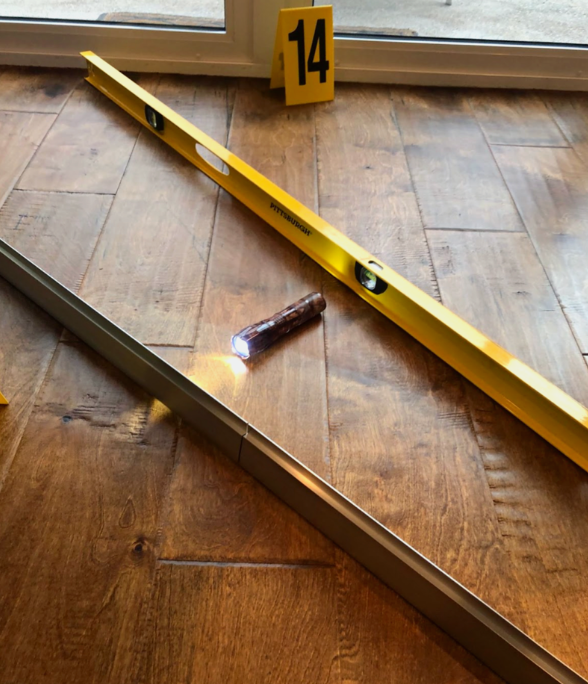
The level and flatness of the existing floorboards should be checked with a straight edge or spirit level. If the flooring is not level enough, it can be lined with various thicknesses of plywood to smooth out any unevenness.
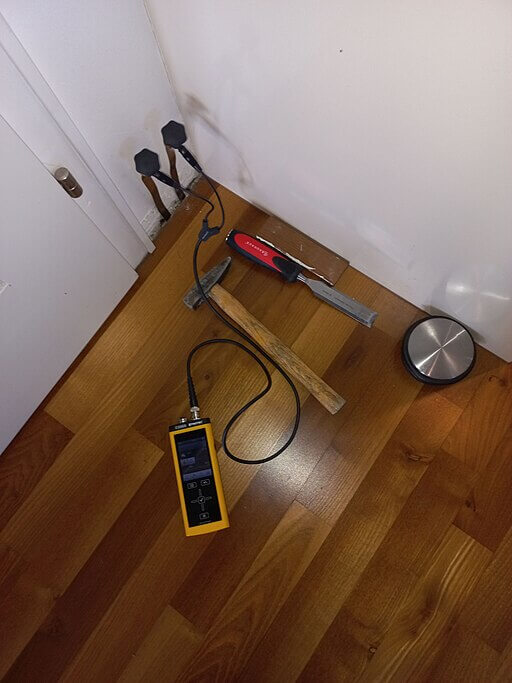
In order to assess the degree of dryness present in the floor, it is imperative to conduct a moisture content analysis by utilizing a moisture meter. It is imperative that a reading of 11-14% MC (Moisture Content) or lower be obtained prior to the installation of any hardwood flooring.
The process of installing engineered wood flooring over an existing wood floor
The engineered wood flooring can be blind nailed directly onto existing wooden floorboards if it is at least 18 mm (0.709″) thick. We definitely recommend using flooring adhesive. Specially designed nails, or flooring cleats should be used, and they should be secured every 300 mm (5″ to 7″) apart to provide firmness and strength.
It is also possible to install engineered wood flooring over an approved underlayment if there are wooden floorboards as a subfloor. Engineered plank flooring should always be secured by means of adhesive and nails. Please ensure that there are no service pipes (gas, electricity, or water) underneath any hardwood flooring when blind nailing.

The installation of solid wood flooring over existing wood floors.
When installing solid hardwood wood flooring, it’s imperative that each plank is secured directly over the pre-existing wooden floorboards with adhesive and flooring “cleats.” For optimal stability, the nails or screws should be approximately 5″ to 7″ inches apart and 300 mm apart.
For blind nailing, a toothed nail (“cleat”) should be used (approximately 2″ inches long) to secure the hardwood flooring to the floorboards. It is advisable not to utilize a “brad” nailer or a finish nailer, as they possess smooth nails that may easily pull out of the floorboards.
In conclusion, it’s imperative to consistently scrutinize the manufacturer’s recommendations for the new flooring in order to avert any potential red flags that may pose a potential problem.
Please fill out the contact form on our website, and we’ll provide you with a FREE estimate for your flooring project. Furthermore, we can help you determine whether your new hardwood floors will be able to be installed over the existing floors. You’re welcome to ask us any questions you may have. Our team of professionals is eager to assist you.