
How to Clean Your Hardwood Floors so They Look Like New (I)

Once you have decided to replace your outdated carpeting, or laminate flooring with hardwood floors, it is best to keep them in tip-top condition. In fact, the primary factor contributing to the longevity of hardwood flooring is the maintenance.
These days, there are many types of hardwood floors available, including solid, engineered, or reclaimed flooring. Whatever type of hardwood floor you have, most types of flooring share the same basic needs, so the cleaning routine will be the same in most cases. Fortunately, the process isn't too difficult to follow, although there are still nuances that are important to achieve the correct maintenance, we would like to share our knowledge and experience with you to help you establish a proper cleaning routine.
The basic needs of almost all hardwood floors are the same:
- It is imperative to promptly eliminate any form of dirt or grit, even if it is necessary to do it daily.
- Whether it’s a weekly, monthly, quarterly, or annual cleaning, it’s necessary to conduct a thorough cleaning, which may involve refinishing the floors and/or spot-repairing any areas that require it.
All hardwood floors will last longer when homeowners take care of them, including avoiding damaging them (Scratches, dents, and bruises are the biggest contributors).
Sweep or Dust-Mop Regularly
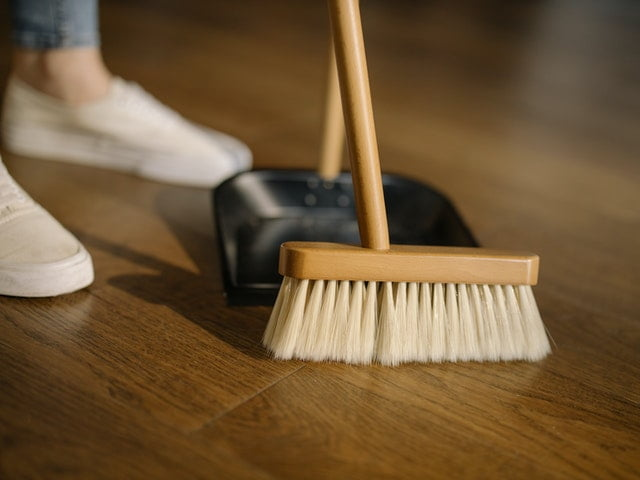
The best practice is to sweep or dust-mop your floors daily. All you need is a soft-bristled broom, or a dust-mop.
Start by removing any large debris (hair, dust-balls, etc.) or dirt from the floor with a broom or dust mop. To pick up the fine dust or dirt, use a dry, soft dusting-cloth, or a microfiber mop. It is important to sweep or dry-mop the floors in the same direction that the grain of the wood runs: make sure to avoid using too much pressure as this can scratch the surface of the floor. For deep, stuck-on dirt or stains, only use a hardwood floor cleaner that is specifically formulated for your type of flooring. Furthermore, you should follow the instructions of the cleaning product and make sure to test it in a small, inconspicuous area before applying it over the entire floor.
Vacuum Regularly
If you intend to extend the lifespan of your hardwood floors, it is important that you vacuum them regularly. The strong suction of the vacuum will remove dust and debris from the cracks and crevices, including any fine particles that sweeping may miss.
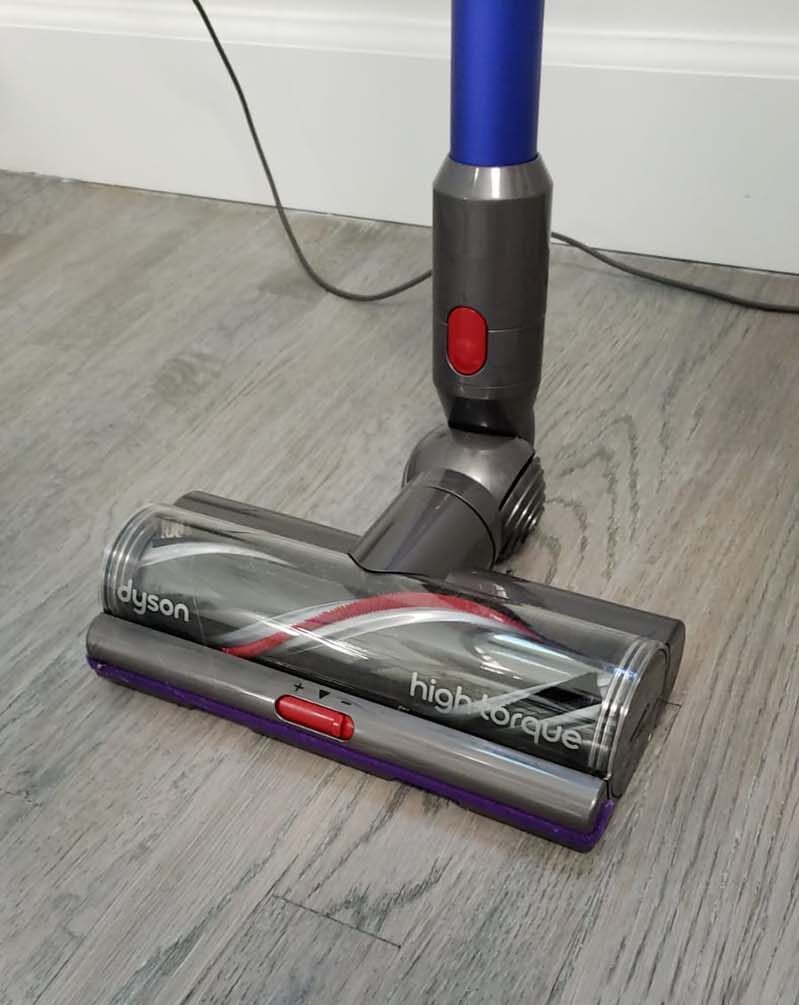
Before vacuuming the hardwood floors, it is recommended to set the vacuum cleaner to the “hardwood floor setting” which disables the brush-roller or “beater-bar” in order to prevent scratching. Alternatively, it is advisable to employ a specialized hardwood floor vacuum.
Below are some additional tips for vacuuming your hardwood flooring:
- As we mentioned above, it is crucial to ensure that the vacuum cleaner is set on the hardwood floor setting. This measure will prevent the spinning of the “beater-bar”, which is the rotating brush that agitates the carpet, thereby preventing any potential damage to the floors.
- To gently remove dirt and debris from corners, crevices, and baseboards, use a soft-bristled attachment or a 'dusting' brush.
- To avoid scratches, please vacuum the floors in the direction of the wood grain.
- Before vacuuming, you should sweep or dust the floors with a microfiber mop to remove as much debris as possible.
- Be sure that the vacuum's dustbin, or canister is empty after each use to ensure its efficient operation.
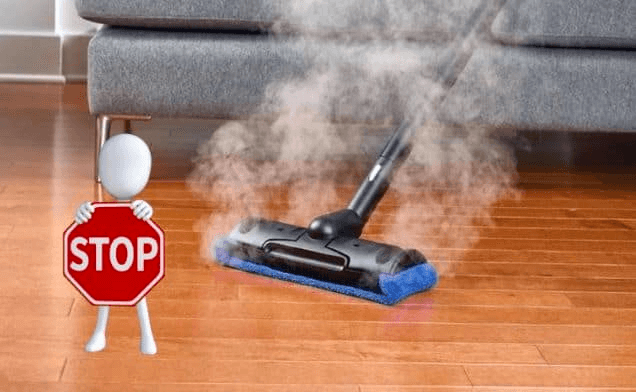
Forget About “Wet-Mopping” or “Steam-Mopping” Your Hardwood Floors!
Hardwood flooring expands when it absorbs moisture, whether it is solid or manufactured planks made of glued-together fibers. The fluctuating humidity, which is influenced by temperature, can lead to the hardwood flooring experiencing a “cup” or cracking. Therefore, please avoid these extreme conditions.
The National Wood Flooring Association recommends keeping a home with wood floors between 60 and 80 degrees Fahrenheit, and between 30% and 55% percent, relative humidity, year-round. With hardwood floors, wet-mopping or steam-mopping is generally not recommended because they can damage the hardwood floors.
The water and moisture generated during wet-mopping penetrate the floors and cause them to warp and/or rot over time. Using a steam cleaner can also cause the hardwood floors to become too hot, which will damage the finish over time. This is also true regardless of whether you have solid or engineered wood floors, including bamboo floors.
Several steam-mop manufacturers, such as Shark and Bissell, assert that their steam-mops can be utilized on sealed hardwood floors. However, we strongly recommend against it, as the moisture will still force itself into the seams between the boards which will eventually warp them.
Identify The Proper Cleaning Product:
When it comes to choosing a cleaning product, there is no strict rule. The treatment of different flooring finishes necessitates varying approaches, therefore, Olde Tyme Floor's flooring experts recommend adhering to the manufacturer's recommendations and utilizing their recommended products.
There are many commercial cleaning products that are suitable for use on hardwood floors. Some floor cleaners are available, such as Bona’s Hardwood Floor Cleaning Kit, or Woodwise’s No-Wax Hardwood Floor Cleaner, which can be purchased online. These products have been specifically formulated for the application on hardwood floors and are safe for a wide range of finishes, although it is imperative to consult the manufacturer's recommendations.
There are also many cleaning products you should avoid using, and, we do NOT recommend using any kind of harsh chemicals to clean your hardwood floors as some chemicals will cause “hazing”. These chemicals will accumulate significantly over time, resulting in an unsatisfactory appearance in the long run. In case you have ever made such a mistake, please don't do this anymore. Then use a really wrung-out microfiber cloth with only warm water to remove the cloudy film.
Please refrain from using any products that claim to polish, shine, rejuvenate, or revitalize the wood floor. Although this sounds promising, these 'cleaning solutions' are not actually doing your hardwood floors any good.
Essentially, the application of supplemental products and unnecessary chemicals on the surface may temporarily enhance the appearance of the floors, but they are not specifically designed to endure.
Always Keep Your Hardwood Floors Dry
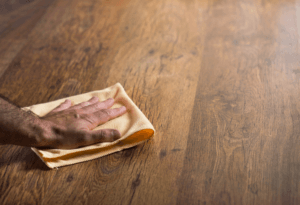
Once you have identified the appropriate floor cleaning product that is specifically formulated for your floors, apply it using a clean and supple microfiber towel. It is advised NOT to utilize a moist bucket and commence soaking the floors, as this may result in the wood swelling and “cupping”.
Due to this reason, it is advisable to utilize a microfiber mop in lieu of a cotton mop, as the microfiber mop requires less water, compared to a wet mop that drips. According to Bona, a prominent industry leader in hardwood floor care worldwide, microfiber mops consume approximately 20x less liquid and are considered the most effective mops for cleaning hardwood floors. Furthermore, you will incur a significantly reduced amount of time spent attempting to remove the mop head, thereby creating a mutually beneficial outcome for both you and your hardwood floors.
Know The Warning Signs
 When it comes to having immaculate hardwood floors, it is not only important to know how to clean them. The environment that surrounds your floor is also a major component of its care and durability. As hardwood floors exhibit a significant response to temperature and humidity, it is imperative to understand these factors as well, even if they are beyond your control.
The advantage of hardwood floors is that they are a natural product, which means that they will readily demonstrate any signs of dissatisfaction. If there is excessive moisture present on, around, or beneath the wood, the floors may experience a phenomenon known as "cupping". By eliminating the source of the water, particularly any standing water, this issue can be prevented from occurring.
Furthermore, conditions that are exceedingly dry can lead to the occurrence of gapping, cracking, and splitting. With regards to this environmental concern, a humidifier can effectively address the issue by introducing a small amount of moisture into the air, thereby enabling your floors to settle back down and thereby restoring their luster.
Refinishing (Recoating) The Floors Before It’s Too Late
When the floors begin to lose their luster, most likely it’s time to have them refinished with a few coats of polyurethane. The refinishing of the floors does not involve sanding, but involves the applying a few coats of polyurethane. This will restore the finish's luster and life, avoiding the sanding process.
The process of recoating your hardwood floors can extend their lifespan for several years by incorporating a layer of protection each time it is required. Many floor finishes are available on the market, and the best choice for refinishing may depend on your needs and specifications. The beauty of hardwood floors is that they can be repaired, resurfaced, and refinished.
Wait for Part #2, as Olde Tyme Floor will demonstrate what we do to maintain our floors. We’ll also answer the most popular questions, including educating you on how our maintenance program works, which can make your hardwood floor maintenance routine easier.